
Fertility & IVF · Acupuncture · Mumbai
Acupuncture for IVF.
How It Actually Works.
How It’s Done, How Often, and Why Gynaecologists in Mumbai Are Starting to Recommend It
Book a Fertility Consultation
Does acupuncture help IVF succeed? Acupuncture supports IVF by increasing blood flow to the uterus, calming the stress hormones that interfere with implantation, and improving the uterine lining’s ability to receive an embryo. Sessions are typically done 1–3 times a week in the weeks before egg retrieval, immediately before and after embryo transfer, and through the two-week wait.
Acupuncture supports IVF through three measurable pathways: uterine blood flow, stress hormone regulation, and hormonal signalling. This article covers the mechanism, the phase-by-phase protocol, how often sessions are needed, what the research honestly shows (including the studies that found no benefit), why Mumbai gynaecologists are increasingly recommending it, and how fertility centres abroad have already built this into routine IVF care.
Practitioners at Balancepoint, Priya Samwani among them, have had the same conversation more times than they can count. A woman sits across from them, IVF folder in hand, and asks the same question in a dozen different ways: “Will this actually help, or am I just paying for a nap?”
It’s a fair question. And it deserves a real answer, not a mystical one.
Acupuncture doesn’t replace IVF. It doesn’t create eggs that weren’t there, and it isn’t a cure for a fully blocked tube. Where it does show real promise, including in a published case report, is with partial tubal blockage, where reduced pelvic inflammation and improved local circulation have been associated with restored tubal patency (PMC, 2019). What it does reliably is measurable, and it happens in three places at once: the blood vessels feeding the uterus, the hormonal stress response that IVF medications provoke, and the nervous system that governs whether the uterine lining is actually receptive to an embryo. In cities like Mumbai, where IVF is booming but acupuncture is still treated as an afterthought, this gap in understanding is costing couples outcomes they didn’t have to lose.
This article walks through exactly how acupuncture works alongside IVF, how a session is actually done, how often you need it, and why an increasing number of gynaecologists (not just alternative practitioners) are telling patients to add it to their protocol.
Mechanism
What Does Acupuncture Actually Do During an IVF Cycle?
Acupuncture influences IVF outcomes through three measurable physiological pathways. First, it increases uterine and ovarian blood flow by reducing the resistance index of the uterine arteries, which improves oxygen and nutrient delivery to the endometrial lining and developing follicles. Second, it lowers circulating cortisol and activates the parasympathetic nervous system, counteracting the fight-or-flight state that IVF stimulation medications and repeated clinic visits provoke. Third, it modulates the hypothalamic-pituitary-ovarian axis, which governs the release of FSH, LH, estrogen, and progesterone: the exact hormones an IVF cycle depends on. A 2019 systematic review and meta-analysis published in BMC Complementary Medicine and Therapies found acupuncture significantly improved uterine blood flow and pregnancy outcomes when timed around embryo transfer. For a patient, this means acupuncture is not addressing “stress” in a vague, spa-like sense. It is addressing three specific mechanical reasons an embryo does or doesn’t implant.
Acupuncture’s job is to fix the soil, not the seed.
In plain terms: your embryo can be genetically perfect and still fail to implant if the uterine lining isn’t receiving enough blood, or if your body is flooded with stress hormones that signal “this isn’t a safe time.”
The uterine blood flow claim isn’t a new theory. Reproductive scientist Elisabet Stener-Victorin and colleagues showed as far back as 1996, using transvaginal Doppler ultrasound, that electro-acupuncture significantly reduced uterine artery pulsatility index (a direct marker of blood flow resistance) in infertile women, with the effect persisting well after the needles came out (Stener-Victorin et al., 1996, Human Reproduction). That single mechanistic finding is the reason almost every acupuncture-and-IVF protocol built since then centres on the uterus, not just “relaxation.”
Clinical Evidence
How Does Acupuncture Improve IVF Success Rates? What the Research Actually Shows
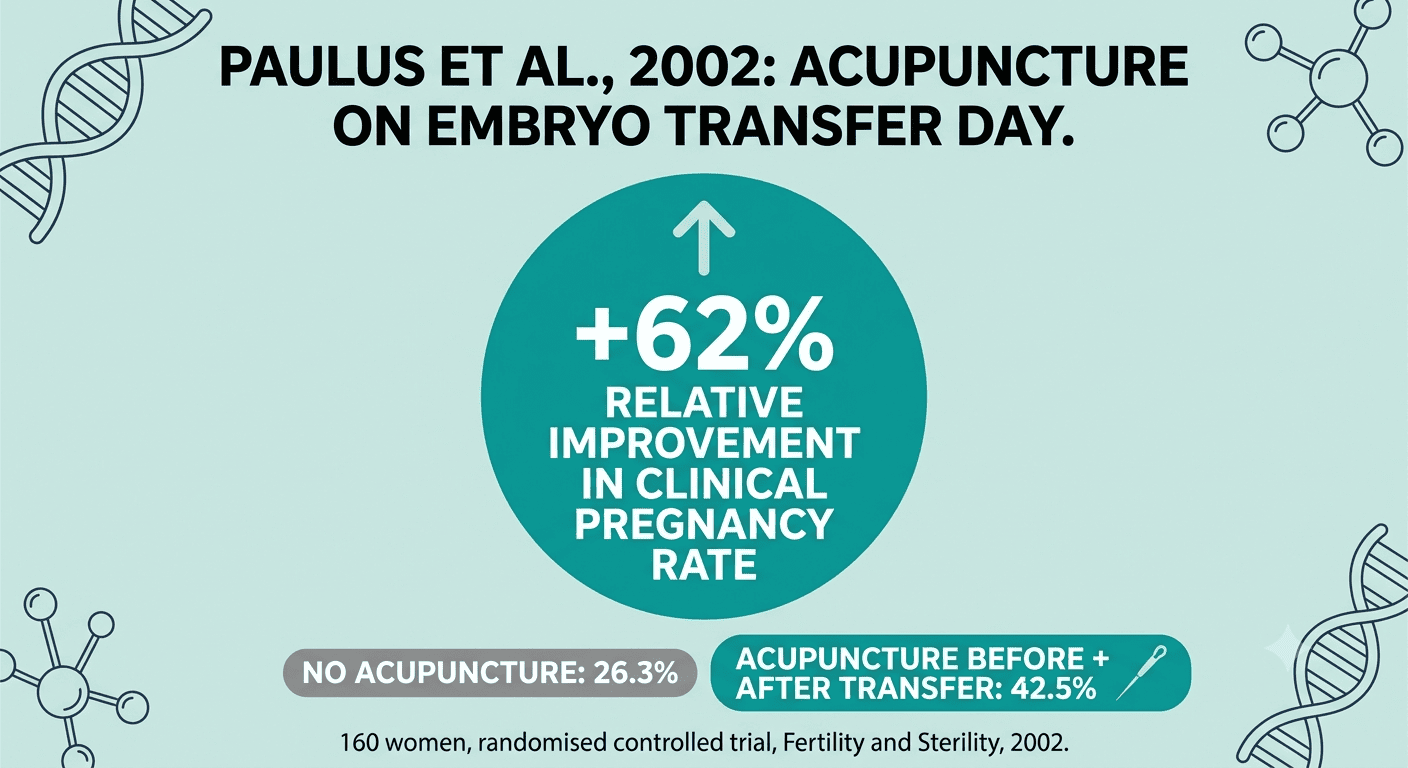
The most cited study in this field is a 2002 randomised controlled trial by Wolfgang Paulus, published in Fertility and Sterility. It found that women who received acupuncture immediately before and after embryo transfer had a clinical pregnancy rate of 42.5%, compared to 26.3% in the control group, a gap too large to write off as coincidence (Paulus et al., 2002, Fertility and Sterility).
The picture has gotten more layered since then, and honestly, that’s a good thing. It means the science is maturing rather than resting on one study. An early 2008 Cochrane-style meta-analysis didn’t find a significant live birth benefit across all patients. But later, larger analyses tell a more specific story. A pooled meta-analysis of 27 studies covering over 6,100 participants found clinical pregnancy rates were significantly higher in acupuncture groups (RR 1.21). A separate review found the benefit was strongest, at RR 1.60 for clinical pregnancy, in women who had already had one or more failed IVF cycles (BMC Complementary Medicine and Therapies, 2019).
“RR” stands for “relative risk,” and it’s simply a comparison multiplier between the group that did acupuncture and the group that didn’t. RR 1.0 would mean zero difference. RR 1.21 means women who did acupuncture were about 21% more likely to get a positive pregnancy test than women who didn’t. RR 1.60 means that advantage jumped to roughly 60% higher, specifically in women who’d already been through a failed IVF cycle. The 2008 Cochrane-style review looked at fewer, smaller trials and focused on live birth, a far harder outcome to move than a positive pregnancy test, which is likely why it came back inconclusive. Later reviews had more data and asked a more precise question, which is why the numbers improved.
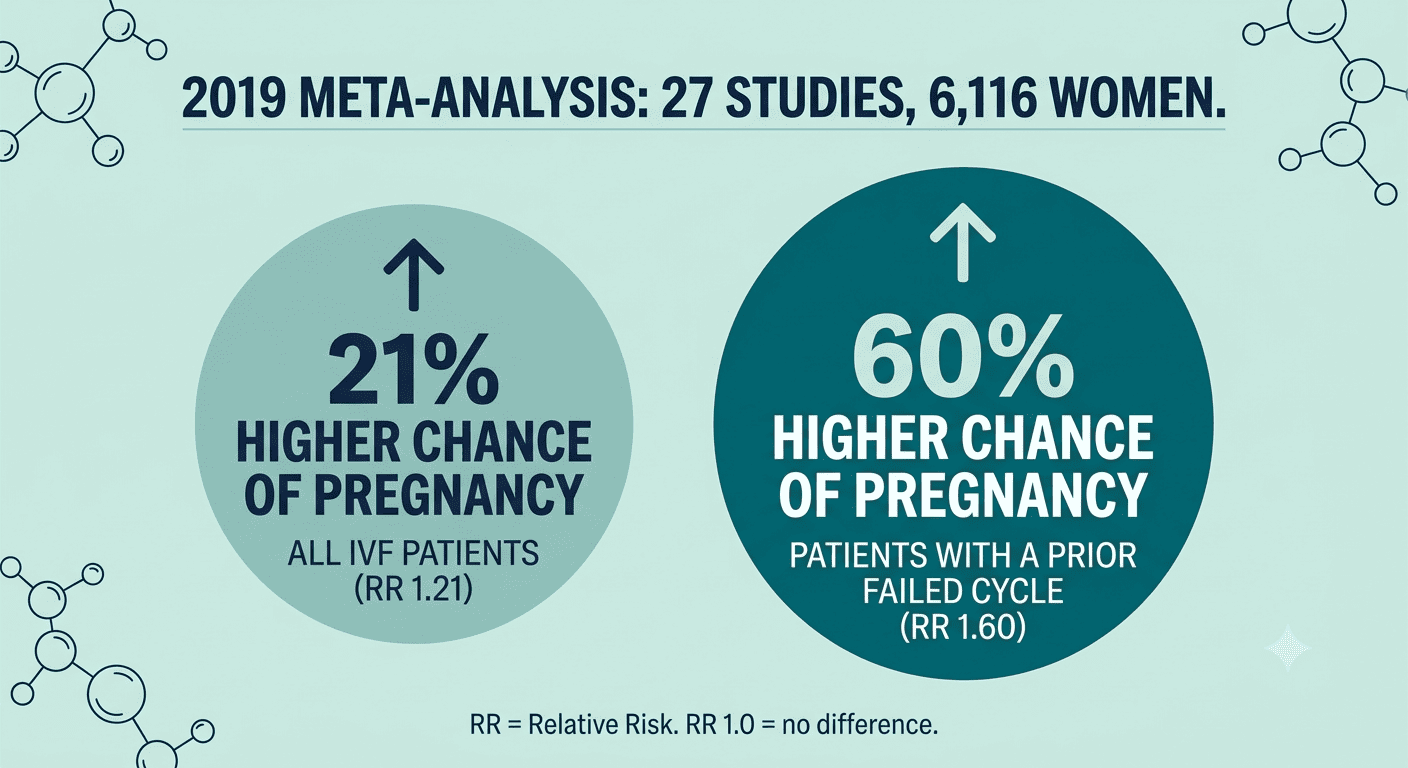
Read that again if you’ve had a failed cycle already. The women acupuncture seems to help the most are the ones who’ve been told “let’s just try again” with no explanation of why the last round didn’t work.
Being fair to the science means including the study that pushes back too, and it happens to be the one behind the timing diagram most people have seen floating around. A 2018 randomised trial published in JAMA, the largest sham-controlled acupuncture-IVF trial to date at 824 participants, found no significant difference in live birth rate between real acupuncture (18.3%) and sham acupuncture (17.8%) when treatment was limited to exactly three sessions: one mid-stimulation, and one immediately before and after embryo transfer (Smith et al., 2018, JAMA).
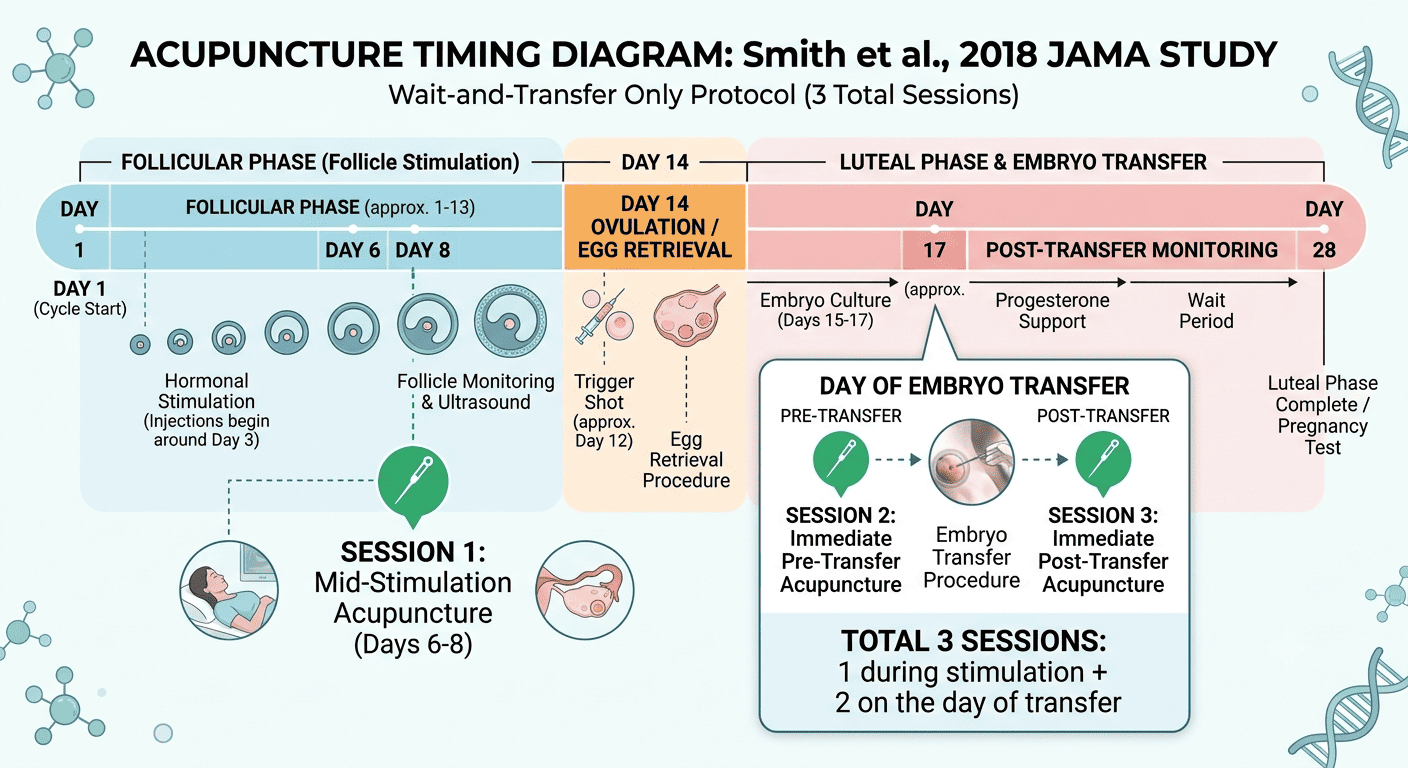
This is worth sitting with, because it’s also the exact protocol most people picture when they hear “acupuncture for IVF.” In Mumbai, this minimal three-session version is often what the phrase ends up meaning in practice: a same-week add-on booked once the transfer date is confirmed, and nothing more. In fertility hubs across the United States, Canada, Singapore, Hong Kong, and South Korea, clinics more commonly build acupuncture into a longer program that starts weeks before stimulation begins, not a same-day extra. That difference in depth, not the needles themselves, is very likely why outcomes vary so much between a bare three-session version and a full protocol.
From the acupuncturist’s chair at Balancepoint: acupuncture is no magic. Doing exactly the three sessions shown in the diagram is a fixed, minimal protocol, and it makes sense that three sessions alone don’t move a live birth rate. Our actual work starts 7 to 10 weeks before an IVF cycle even begins, when we’re addressing whatever underlying pattern, a hormonal imbalance, poor circulation, a high stress load, is making conception harder in the first place, alongside lifestyle and diet, which matter just as much as the needles do. No athlete walks onto the court expecting to win without weeks of training before the match that actually counts. IVF acupuncture runs on the same logic: the transfer-day sessions are the match, and the preparation phase is the training. Not every patient needs the full extended program; some come in needing little more than stress support around the injections. But most of the people we actually see in clinic do.
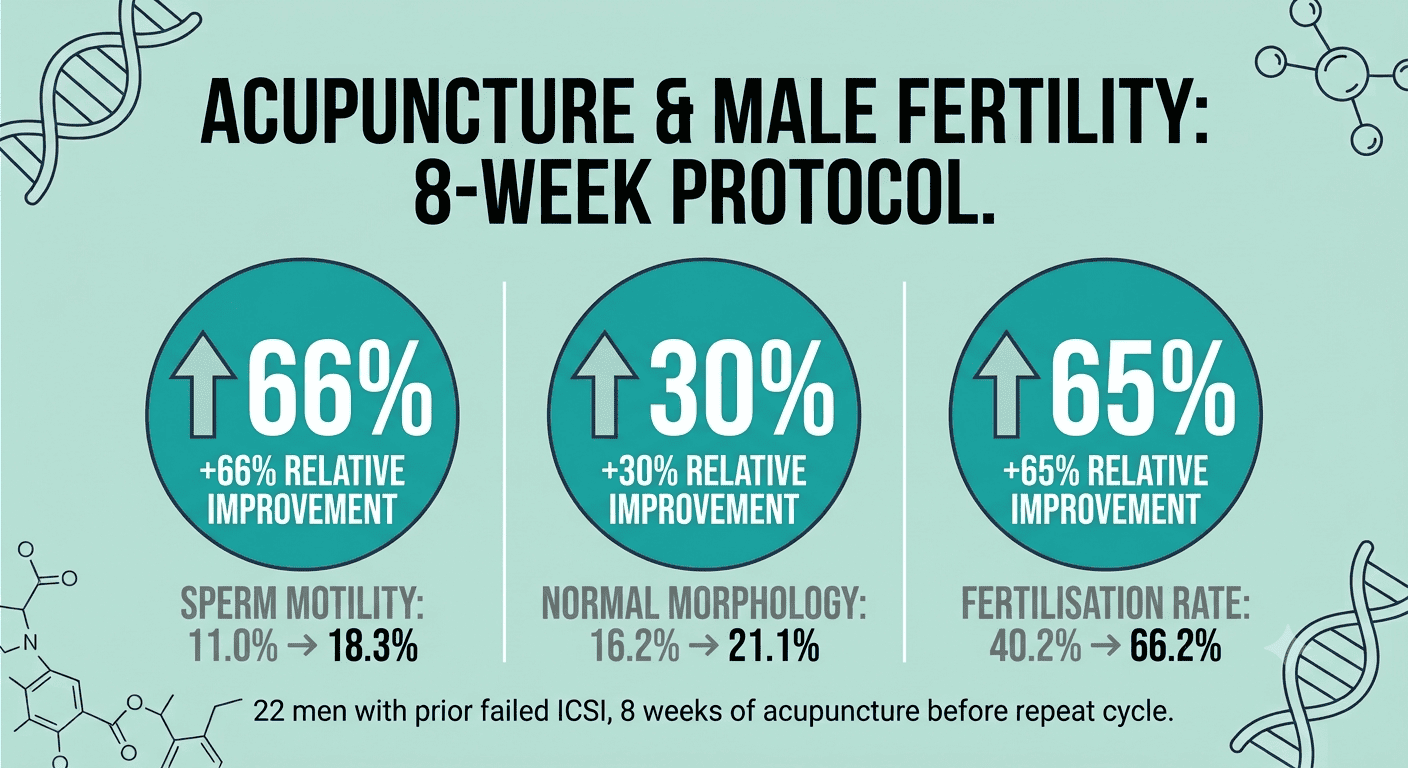
A separate 2019 trial from the same research group found that acupuncture significantly reduced anxiety around embryo transfer, even where live birth rates were unchanged (Smith et al., 2019, Acta Obstetricia et Gynecologica Scandinavica), and a widely cited 2009 study by psychologist Alice Domar found acupuncture patients reported significantly lower anxiety and higher optimism than controls during IVF (Domar et al., 2009). For men, a controlled study of 22 patients with prior failed ICSI found sperm motility rose from 11.0% to 18.3% and normal sperm morphology improved from 16.2% to 21.1% after eight weeks of acupuncture, with fertilisation rates climbing from 40.2% to 66.2% on the repeat cycle (Siterman et al., Current Medical Science).
At Balancepoint Chinese Med Clinic in Bandra, Mumbai, this pattern holds up clinically too. Patients who start acupuncture at least six weeks before their IVF cycle, rather than parachuting in the week of transfer, consistently show steadier hormone readings on their bloodwork and report fewer stimulation side effects (bloating, insomnia, mood swings) during the two hardest weeks of the process.
The Protocol
How Is Acupuncture for IVF Actually Done? The Session-by-Session Protocol
Nobody explains this part well, so here’s what actually happens, phase by phase.
- Phase 1: Preparation (6–10 weeks before stimulation begins). This is the longest and most underrated phase. Because an egg takes roughly 90 days to mature before ovulation, acupuncture here focuses on the follicles that will eventually be retrieved: improving ovarian blood flow, regulating the menstrual cycle, and addressing whatever pattern shows up (Kidney Yin deficiency, Liver Qi stagnation, Blood deficiency). Sessions typically run 1–3 times a week.
- Phase 2: Stimulation support (during the injection phase). As hormone medications kick the ovaries into overdrive, treatment shifts toward managing the fallout: bloating, liver-processed hormone load, and the emotional volatility that comes with daily injections. Sessions typically increase to 1–3 times a week here.
- Phase 3: Transfer day. This is the phase with the strongest research behind it. One session is done roughly 25 minutes before embryo transfer, focused on calming uterine contractions that can physically expel an embryo before it implants. A second session follows immediately after, aimed at supporting retention and lowering the stress response triggered by the procedure itself.
- Phase 4: The two-week wait. Short sessions, usually once or twice, focused on progesterone support and nervous system regulation. This is less about “doing more” and more about not undoing the work already done. Over-treating in this window can be counterproductive, which is exactly why protocol discipline matters more than frequency here.
Frequency
How Often Do You Need Acupuncture During an IVF Cycle?
There’s no single universal number, but the pattern that shows up across research and clinical practice looks like this:
- 8–12 weeks before retrieval: 1–3 sessions per week (preparation phase)
- During ovarian stimulation: 1–3 sessions per week
- Around embryo transfer: 1 session immediately before, 1 immediately after, same day
- Two-week wait: 1–2 sessions total, spaced out
Couples who walk in the week of transfer asking for “the acupuncture that helps IVF” aren’t wrong to come. The transfer-day session alone has real evidence behind it. But they’re getting a fraction of the benefit compared to someone who started two months earlier.
Referral Trends
Why Are Gynaecologists in Mumbai Starting to Recommend Acupuncture Alongside IVF?
A growing number of reproductive endocrinologists now view acupuncture as a low-risk, evidence-supported adjunct to IVF rather than an alternative to it. Unlike supplements or unregulated herbal protocols, acupuncture carries no known drug interaction risk with IVF stimulation medications, which is a major reason fertility specialists are comfortable co-managing patients with a trained acupuncturist. In cities like Mumbai, where IVF clinic volumes are rising sharply and patient stress levels are correspondingly high, gynaecologists are increasingly asking patients directly whether they’ve considered acupuncture support, particularly after a failed cycle. Balancepoint Chinese Med Clinic in Bandra, Mumbai, works with patients referred by their reproductive endocrinologists specifically for transfer-window and stimulation-phase support, reflecting this shift from parallel treatment to genuine co-management.
This is a real shift from even five years ago, when most patients quietly booked acupuncture sessions without telling their fertility specialist, half-expecting to be told it was pointless. Today, it’s common for the recommendation to come from the gynaecologist’s side first.
Global Comparison
How Do Other Countries Integrate Acupuncture Into IVF, and Why Is India Still Catching Up?
Walk into a fertility clinic in Munich, San Ramon, or Cleveland, and there’s a decent chance the acupuncturist works down the hall, not across town. The Reproductive Science Center in the Bay Area partners directly with an on-site acupuncture team for IUI and IVF patients. UH Connor Whole Health in Cleveland runs its fertility acupuncturist as part of the same multidisciplinary team as the reproductive endocrinologists. In London, the AcuMedic Fertility Clinic sees a steady stream of patients referred in by their own IVF doctors specifically for the integrative approach.
China never separated the two disciplines to begin with. Hospitals like Tongji Hospital in Wuhan run dedicated Departments of Integrated Traditional Chinese and Western Medicine inside their reproductive centres, and facilities like Sichuan Jinxin Xi’nan Women and Children’s Hospital run active clinical research pairing electro-acupuncture directly with IVF cycles, treating it as a studied clinical variable rather than a wellness add-on (PMC, 2022).
India is behind on the infrastructure, not the demand. Mumbai alone now has multiple dedicated fertility acupuncture practices with a steady patient base, and the appetite is clearly there. What’s missing is the same thing that was missing in the West a decade ago: a habit, on the part of gynaecologists, of treating acupuncture referral as routine rather than fringe. That’s changing. Slowly, but it’s changing.
Real Questions
What Indian Couples Actually Search For, and What They’re Really Asking
Underneath the search bar queries, the real question is almost always some version of: “Is this real, or is it hope dressed up as medicine?” Here’s what that translates to, and how to think about each one.
- “Does acupuncture really work for IVF or is it placebo?” The evidence is mixed, not one-sided. A large 2018 JAMA trial found no live birth difference when acupuncture was limited to two sessions on stimulation and transfer day, while pooled meta-analyses of full multi-week protocols show a real, measurable rise in clinical pregnancy rates, especially after a prior failed cycle. Protocol length appears to be the deciding factor.
- “Can acupuncture increase AMH or egg quality?” Clinical evidence increasingly says yes, within limits worth understanding honestly. A 2023 systematic review and meta-analysis of 13 randomised controlled trials covering 787 women with diminished ovarian reserve found acupuncture produced a measurable increase in both AMH and antral follicle count (Frontiers in Endocrinology, 2023). For egg quality specifically, a study on infertility patients with a Kidney-deficiency pattern found electro-acupuncture directly improved oocyte quality (PubMed, 2015), and separate research has documented acupuncture restoring healthier mitochondrial structure inside ovarian tissue, the cellular engine that determines how well an egg matures. Over the roughly 90-day window it takes an egg to mature, that’s a real head start, not a marginal one.
- “Is it safe to do acupuncture during IVF injections?” Yes, when done by a practitioner trained specifically in fertility protocols who knows which points to avoid during stimulation and which ones to avoid entirely once you’re pregnant.
- “Will my gynaecologist be okay with me doing this?” Increasingly, yes, and in a growing number of cases, they’re the one suggesting it. If yours isn’t there yet, it’s rarely because the evidence contradicts acupuncture. More often it comes down to one of three things: some doctors are simply cautious about anything running alongside a purely allopathic protocol, some have had little real exposure to how TCM acupuncture actually works and haven’t had the chance to study it in depth (fair enough, since trusting it does require actually understanding it), and the newer research in this space moves faster than most specialists have time to track between patients. None of that makes acupuncture less real. It has been in continuous clinical use for over 2,000 years, and a great many patients today still credit it for helping them conceive when nothing else was working. A cautious gynaecologist isn’t a red flag. It usually just means the conversation hasn’t happened yet.
FAQ
Frequently Asked Questions
- Paulus et al., 2002, Fertility and Sterility. PubMed
- BMC Complementary Medicine and Therapies, 2019 meta-analysis. BMC
- Stener-Victorin et al., 1996, Human Reproduction. PubMed
- Smith et al., 2018, JAMA. PubMed
- Smith et al., 2019, Acta Obstetricia et Gynecologica Scandinavica. PubMed
- Domar et al., 2009. PMC
- Siterman et al., Current Medical Science (idiopathic male infertility). Springer
- Systematic review, acupuncture as IVF adjunct in China, 2022. PMC
- Systematic review and meta-analysis, acupuncture for diminished ovarian reserve, 2023. Frontiers in Endocrinology / PMC
- Electro-acupuncture and oocyte quality, Kidney-deficiency pattern infertility, 2015. PubMed
- Case report, successful pregnancy after electro-acupuncture in bilateral tubal obstruction, 2019. PMC